Best Practices
4 Bold Predictions for Accounts Payable in 2022
View transcript
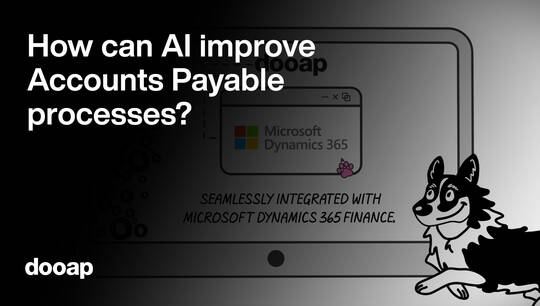
in the past herding sheep took a village but today shepherds rely on their oldest most loyal companion the canine the majestic border collie as it has been bred to do for decades pans out across the open field with speed and endurance to wrangle the flock and prod them from place to place not a single one ever goes astray its natural instinct to herd sheep is akin to complete end-to-end accounts payable automation wait so do app as a dog and an ap solution i guess i'll keep reading take two prized for its intelligence work ethic and lovable demeanor duap drives efficiency solving the headaches of outdated manual processes do app guides ap teams across the microsoft dynamics 365 finance postures the goal to wrangle all invoices in a timely and cost-effective manner so the sheep are the invoices this makes sense now take seven a fast and eager learner duap is best of breed and machine learning and ai with optimizations to the ap process do app reduces repetitive and tedious tasks so that ap staff can engage in more critical value added assignments and with due app by their side management can have better visibility into cash flow avoid payment fraud and remain compliant don't settle for a dog that can't learn new tricks call on due app for all your accounts payable automation needs thank you so much for joining us today my name is mark brusso and during the next hour we're going to share with you four bold predictions for accounts payable and i'm pleased to be joined today by mikko and anna to provide their sage advice on what they're seeing coming in the market and how it is that accounts payable practitioners can prepare you know it struck me when i watched that video when they talked about new tricks it seems like accounts payable leaders have learned quite a few over the past 20 months it's been said the change comes slowly to accounts payable but 20 months ago seemingly everything changed and it's changed overnight we've settled into new ways of working new operational challenges new risks and new pressures to provide reporting now comes the hard part preparing our departments for the future that lies ahead and today mikko and ann and i are going to share with you what we see as the biggest trends that you need to be prepared for in the future as you position your department for growth and success before we get started i want to give mikko a few moments to tell you a little bit about the sponsor today's webinar do app miko thanks mark appreciated and uh welcome everybody on my behalf to to the webinar to so uh before we actually uh let it over to mark just a few words on on do apps so um do happy software company we've been around for a little over five five years what we're really focused is ap automation and we're gonna talk a lot about that uh later on today and mark's predictions and uh hopefully we're able to answer some of the questions that that you're having we're very focused on on the microsoft dynamics ecosystem so we support dynamics 365 fno and ax 21.12 uh we got 50 plus clients uh currently most of them are are in north north america and i think if we look at overall the company where we're really focused is that is growing our customer volume as part of that keeping our clients really really happy which is something that we're particularly proud of and if we look at it over time everybody's pretty much that have has started with us have stayed with us and if we look at our customer satisfaction it's very good that we we want to keep it that way so that's uh briefly about do that so over to you mark thank you so much mikko look forward to your insights today so what's our first prediction for accounts payable in 2022 well it's that machine learning is going to be the table stakes that brings us to our first poll question which is about to be displayed on your screen in order to see the poll we want you to go ahead and click on the poll button in the lower right hand side of your screen and please click on the response and hit submit we want to know does your ap department currently use machine learning as part of its invoice processing yes no no but planning to within 12 months or no but planning to within 12 to 24 months take a moment to respond to the poll question now displayed in your screen we're going to discuss those results in just a moment so anna in a study released late last year the institute of finance and management found that 77 of accounts payable departments here in the united states now have some type of technology in their ap department now that's not to say that they're doing end-to-end automation like miko just referenced a few moments ago but they have something it seems to me that today we've settled the debate about the importance of automation and now we're looking for better ways to automate our department is that an accurate assessment of what's going on today in ap absolutely and and in finance in general things where machine learning is typically used is is the situations where patterns can be based on previous invoices and then you can utilize that information so it's about about the data typically these are like coding routing matching those are kind of the non-brainers for it but how it can be now utilized in the future there is more complex things like discrepancy management or things like that for this question uh most of our customers are using machine learning or at least testing with with the available functionality because you can always of course test but if you want to do manual of course that is always there what's the biggest misperception about machine learning anna uh well probably that it's it's hard and cumbersome to take into use so of course the software usually supports that it has to be easy it has to be something that you don't have to do configurations for yeah what would you say to someone who's on the line today and has some sort of an invoice processing solution that doesn't use machine learning what are they missing out on well i would i would want to see show them what they're missing out of of course so uh thinking that that i think there is a saturation point on how much you can do with rule based so at some point you have to give up and then start using machine learning where it learns by itself excuse me sorry we asked our attendees does your ap department currently use machine learning as part of its invoice processing 40 of our attendees today anna say that they're using machine learning in their department another 40 said no they're not using the technology and they don't have plans to do so another 20 of our attendees say they aren't using the technology but they plan to do so within the next 12 months all right this is your chance what do you want to say to those 40 percent of folks who aren't using the technology and they have plans to do so i hope to do so i think that's that's well i hope today we can kind of convince convince you otherwise because there is so much things that you can achieve without actually doing too much work and that brings us to our next slide when we think about any discussion about ap automation it ought to be framed around just that what is it that you're trying to achieve in ap and when ap leaders were surveyed earlier this year about what it is their top priorities for improvement are five things really came out in the front obviously cost reduction is number one today all across the corporate enterprise departments are being asked to do more with lesson this isn't going to change even as the economy gets on firmer footing secondly organizations are looking for ways to better manage their spending in many cases they're trying to free up cash so they can invest it back in the business typically for growth generating activities organizations are also looking for enhanced visibility they want to be able to get visibility what's going on with their cash flow their spending their operational performance even the risks additionally organizations are looking for ways to facilitate collaboration not just in the department but across the organization and today we know that when we talk about a collaboration across the organization that doesn't mean just across the office building it could mean across town or even across the globe and finally organizations are looking for ways to better manage their working capital and if there's one lesson businesses have learned over the past 20 months it's that they've got to get a handle on their cash flow and when we look at the next slide what we see is that achieving all of that is a little bit more challenging for organizations particularly those of you who are using manual or semi-automated approaches to invoice processing today this move to remote and hybrid working well it's really disrupted the way that accounts payable departments have worked and that has created a lot of new challenges for ap leaders first and foremost among them 25 percent of ap leaders say they're struggling with fraud and compliance issues we know that hardened policies and procedures for how it is that invoices should get processed and payments should get paid they were thrown out the window and we sent our people home to work we need to get control over things another 22 percent organization say they're struggling with a spike in supplier increase that economic downturn and uncertainty we've had since then well that's really put the cash crunch at your suppliers they want to know where things stand with their invoices and payments they want to be sure they're going to get paid as soon as possible another 20 of ap leaders say that they're struggling to pay their invoices on time this makes perfect sense a lot of us are trying to adapt paper processes into this remote work environment some of you are using email yes email to route invoices around and this is creating new challenges you can't get visibility into somebody's email box to see what they've done with that invoice and so invoice due dates are becoming a struggle and all of this all of this is where machine learning comes in as anna said machine learning does five critical things and you'll see those on our next slide number one it helps us identify patterns and that could be in vast data sets so we're talking about a technology that's easily scalable what's more it helps us uncover correlations it makes those connections that we used to have to rely on business analysts to find for us and once it's got that data and it's identified those correlations and patterns now it can help us make decisions to accelerate those flows help us predict what will happen as a result of those decisions and the crazy thing about machine learning is that it improves over time that's right the more data the more experiences the more decisions it gets to partake in and observe the better its results this has big implications for accounts payable departments next slide when we think about all those things that it is accounts payable departments are trying to achieve reduce costs get better visibility into into cash and spend and and be able to accelerate cycle times this was tailor made for machine learning and anna there's a lot of applications for machine learning in accounts payable you want to give us a couple examples of what your do app customers have in mind well uh there is uh i would say that there is many certain main categories for machine learning development that that we're doing there is uh we're trying to automate something that is a manual we want to recognize what the users could automate so they don't have to do that in the future and then there is the analytics side and the analytical side is growing fastest i think that this is uh what we need most in 10 years and then the automation part is what we need immediately actually already on yes yesterday so so these are the things that we do want to focus in in getting getting machine learning into work yeah you talked about uh 10 years but but over the past two years digital transformation initiatives have really accelerated and this is a great time for technologies like machine learning talk to us anna about how this new normal in which you're operating in how that's impacted the accounts payable departments you're talking to well uh of course how the recent past years went like you already said uh these kind of crisis crisis push digital uh payments and digital finance forward it's it's forced when kind of with our clients and with the customers that we were just implementing they were pretty much safe when they started and you couldn't be over in the office to get those invoices there and when all the companies were pushed more to digital site it started from the accounts receivable side finally people noticed that hey we're not getting paid if we send out paper invoices and that brought us new problems so for example uh there is whole sets of uh of problems when everything is digital and then fraud for example uh comes in place like you already said and you showed the 25 percent has been the concern uh in in fraud attempts there has been increases during the pandemic because it is a perfect environment for it but modern problems modern solutions and the possibilities here uh for example using artificial intelligence which machine learning is for spotting fraud so here are kind of the good examples we use machine learning to recognize anomalies in the data and you can actually susp spots like suspicious vendors if there is from old vendors you get get new payment methods new payment addresses why is it is it accurate or is this this uh there's some kind of a fraud invoice in between accurate ones and um if you really dig into things there is also things that you can just recognize from invoice numbers and still the best thing is that i don't have to figure out the things what to look for artificial intelligence will look for those odd ones out instead of kind of with on its own without me amigo this sounds really compelling to me how do you see machine learning evolving in accounts payable over the next five years yeah mark i would actually go back to build what you said earlier that do more with less and i i guess anarchy some create examples of of the applications but i think it's the same as as with ap team and other teams that you always kind of just get more done and i think what up in the kind of wider context what machine learning is going to do kind of the data entry part and let's say kind of the things that we do day to day that's gonna be less in the focus but then we can actually more focus on on the exceptions and complicated things so essentially it's gonna give us more more time and i think that's probably the the biggest application of it so it kind of makes our life easier so that we can focus on something else so we can just get more done with the same same amount of people working in the organization i think that's kind of one one guiding principle that i have in my mind in today's labor shortage that's music to an ap leader's ears mute miko so so anna talk to me how is it that do app is using machine learning in its solutions today well pretty much those aspects that i did list so everything that is manual try to automate that uh try to find out what could be automated even more and then of course the analytical side but uh fro from the um kind of what my aspect was with the with this that what is the paradigm say change in what ap is used for so uh in the future and future the futuristic ideas is that there will not be the finance teams at some point so in that point what do you do with an ap solution you use it for analytics you need it for that deeper dive you need to use it for for the information yeah clearly this is a great use of artificial intelligence technology i'm curious anna do you see more for ai in the future how do you see ai broadly evolving over the next several years yeah fully automating what we do do now can be easily easily done and what we need to do in the future is more complicated so i don't think that that we we're in even the risk that okay we automate everything and that's it and no one has to as do anymore have that finance team no there is a lot of things things that need to happen still and uh the changes there what the future is it is going to affect a lot of the structure on how organizations work because financial talent is going to be needed in every business unit and as the machine learning in that that sense does develop and you don't have to actually do those manual tasks anymore then the uh kind of uh sorry accounting reporting and compliance are the things that we do so much less and we focus on analysis prediction and decision support you know the way i see it anamiko is that ai and machine learning helps eliminate all of those things those manual repetitive tests that nobody wants to do and freezes up for more fulfilling higher value activities and that brings us to our second prediction which is north america takes a big step towards electronic invoicing let's start with a poll question which is about to be displayed on your screen this time we want to know how has the volume of invoices that your ap department receives via snail mail changed over the past two years are you getting significantly fewer snail mailed invoices a 10 decrease or more are you getting slightly fewer you still mailed invoices up to a 10 decrease has been no change you're just getting as many paper invoices today as you were two years ago or has it gone up are you getting slightly more or significantly more paper invoices take a moment to respond to the poll question now displayed in your screen we're going to discuss the results in just a moment and remember click the result hit submit and we'll discuss them in just a moment so anna i guess this begs the question this poll question is why the devil do we still have so much paper here in the united states and in north america well as as i'm originally from finland which is a forest industry country i'm kind of still happy that there is a lot i have mixed feelings about this are you sure you want to get rid of that paper with my professional view is in ap is that paper will lead into trouble so i'm expecting this this result from the poll to be that it is going to be significantly lower the amount of paper that is is received based on the facts that that's uh past few years have forced us towards it and that is a good thing what is an electronic invoicing well an electronic invoice and what is it not anna well that is a good question so what has happened in the in the past years is that immediately without doing any investments which has been easily on hold people started just pushing out pdf invoices through may and that leads us to a new problem we're still has a kind of hassling with those pdfs we're we're moving them from box to box we're saving them and losing them just as much as we lose paper so a real e-invoice is not up any document that doesn't have intelligently the data already included something that we can use so that we don't have to capture it we don't have to key it in we don't have to do anything we just get the invoice picture we get that data that is embedded and they go to the system accurately fast in real time and i would argue that emails are the new paper we've got to do something about them as well we asked our attendees how is the volume of invoices that your ap department receives via snail mail changed over the past two years eighty percent eighty percent of our attendees and amico say that they've experienced a significant reduction in the number of paper invoices they received 20 percent of our attendees said it's slightly lower no one here is reporting they're getting more paper invoices compared to two years ago i reckon that doesn't surprise you mikko does it no it doesn't at all and i think that is something we're seeing in our our business too obviously we want to be going paperless and we've been there for for a long time already but you still get that odd paper invoice but not anymore i mean we're not getting the real electronic invoices as we would like to but anyway there's no paper which kind of makes life still a bit easier even though as you said it's kind of a new new paper but uh for sure we've seen this in our operations that paper invoice is no longer the thing there's lots and lots of problems when it comes to paper and emailed invoices as our next slide will show you when we think about those invoice delivery chests well they cost too much in many cases you have manual labor even with pdfs i spoke to a company recently was pretty proud of themselves they are now receiving nearly all of their invoices from suppliers via email after all no one could get into the office to open the mail last summer one small problem with all that their staff is actually working longer hours these days what the devil's going on there it turns out they're printing out all those pdf emails they're re-keying stuff directly into their erp they're having all these inevitable issues with slowdowns in their processes miskey data and you know what nobody knows where any of these invoices stand in the process after all the ap manager can't see into somebody's outlook box and we all know that when those emailed invoices are being pushed around that's throwing the door open wide the bad guys who want to try and infiltrate our systems they want to impersonate legitimate senior executives and legitimate suppliers and trick us into making a payment to them and not to a legit supplier this is the environment we're in to say nothing of all the manual activities that paper and email take let's look at our next slide i told you a little bit earlier that 77 of all ap departments today have some sort of ap automation technology but another study from the past year found that 64 percent of all ap departments still manually handle most of the invoices that they receive they seems to be in conflict with one another that means that lots of automated departments are doing lots of manual handling and that speaks to the opportunity for electronic invoicing next slide when we think about why it is that we do all this manual handling of invoices here in north america well i would argue that a lack of invoicing standards is largely to blame next slide what we find is is that there's no way for us to have the same song sheet so even though suppliers and buyers might have the best intentions we simply don't know how it is that we should be exchanging all this data so when i think about all of the manual keying and complexity and risk that occurs in accounts payable and yes even accounts receivable it really does boil down to the fact that we have no way to be able to exchange information in what i'd call a frictionless manner well an electronic invoice exchange framework market pilot hopes to do something about all of that anna what what is this thing and what's the objective here well the objective is to gather every company in u.s that actually wants it to have an easy low threshold access to exchange invoices inside the network the idea is is something that is used in other parts of the the world and we are kind of hoping to copy that model and adjust it to fit exactly what the u.s market really needs and uh this is the first time that we see that that actually the businesses in the market are coming together and trying to achieve a joint goal and the pilot will finally set a foundation for the streamlined exchange of invoices here in north america so you might be wondering how is it that we can prepare for this e-invoice exchange framework next slide please well there's really three things that we want to impress upon you to start doing this year to get ready even if you're not in the pilot the first of course is to learn and this is the first step right here today we want you to become aware of what it is the pilot is and what it's going to do and maybe even how you can participate when the time is right and second well you want to digitize this is after all an electronic invoice exchange network not a paper not a semi-electronic this is a digital environment so if you haven't automated yet and let me correct that if you haven't fully automated yet get going and third as part of those digitization efforts centralize your invoices you want to be able to get them all in one place so that now you're able to be able to do that exchange so anna is there anything else organizations ought to be thinking about as they get ready for the e-invoice exchange environment one thing is well many things are important but one especially is to think about the adoption so this as this framework like i said it's based on the concept that it's easy and uh low-cost way for every company to to join and it's built so that not every company needs to have an i.t project to start with it so the exchange framework is formed from access points that are your service providers and those are the typical service providers that you might have already today like your edi partner ocr ap solution provider they onboard all their customers your companies uh board to the framework and they deal with the technical things so most often you don't have to do any changes to anything for example with do up every of our customers is already compatible even before the market pilot has started they're already compatible and they are just going to have to make the decision do they want to be receiving invoices or not and why wouldn't they because they're guaranteed to be to be cheaper so what you have to now do is to make sure that your service provider is in this project yeah so i know that you're on the steering committee of the market of the of the market pilot uh i'm curious where do you see the project going from here what's the global thinking uh so like i said uh this is kind of a good kind of good opportunity as the businesses are coming together to develop something together that has huge cost savings to everyone who is using it so we have a big group of companies that have experience from the same kind of proven model from the other parts of the world and now kind of we can easily implement those learnings uh in the u.s market so there is kind of really good benefits and and and we're going to gain again kind of so much more with little effort by learning from others this is a really exciting opportunity for north america i mean we've just never had a group before come together from so many different stakeholder corners to be able to say let's try and solve this problem i think for the first time we actually have a fighting chance against paper and emailed invoices that brings us to our next trend for 2022 which is accounts payable becomes an information hub for the corporate enterprise we have a poll question on this topic which is about to be displayed on your screen this time you want to know how is enterprise demand for real time visibility into your invoice data changed over the past two years are you getting significantly higher demand for your invoice data are you getting slightly higher demand for your invoice data is it unchanged well maybe demand was already high maybe it's already low are you getting slightly lower demand or are you getting significantly lower demand nobody nobody i say is calling or emailing you i find that hard to believe take a moment to respond to the poll question on the screen by clicking the appropriate response and hitting submit i will discuss the results in just a moment and it seems to me accounts payable departments sit on a treasure trove of data and yet a lot of those ap departments i talked to are still using spreadsheets and sharepoint and even pen and paper for managing this data is this what you find when you talk to ap leaders surprisingly i think it was a study that 87 of companies are in the the data maturity level of the first or second step so really in in taking only first baby steps so in that maturity model thinking on on how you are utilizing that data or are you only doing reports every time for one specific purpose or are you systematically using using it to analyze to find the bottlenecks to to do a smarter things with it and unfortunately the the percentages are so low and companies are so little using that and they haven't uh taken the strategic decision to become data driven yeah i think we're going to see that be one of the fallouts of the events of the past two years i think organizations are finally waking up that they have to get at that ap data we asked our attendees how is enterprise demand for real-time visibility in your invite state of change over the past two years fifty percent of you said you're experiencing significantly higher demand from corners of the business for what it is you process another fifty percent you say it's unchanged well if you are in that significantly higher demand category you're not alone take a look at our next slide a study done by the uh institute of finance and management found that many organizations are experiencing greater demand for their invoice data and that really doesn't surprise me when i consider how it is that businesses are using all that information take a look at our next slide what we find is is that that ap data that we have is imperative to things like cash flow analysis to be able to see in real time where we are with our accruals to be able to drill down into into data to be able to uncover some of those cash flow trends ap also helps us be able to get at spend management we can instantly see amount of spend by supplier maybe by category or business unit and this really helps us get control over our spending it helps us make more intelligent budget decisions what's more ap data can help the organization better manage its operations and of course as anna spoke of earlier it could help us identify transactions that seem suspicious and might indicate risk so anna give me some real life examples of how it is that organizations are using the type of invoice data that do app is capturing real life examples on it well uh kind of the bottleneck finding is one of the most important things so we have new kind of dashboards that have especially been designed for seeing the process automation how it's happening where you can improve and this really is then kind of showing you what and how you can utilize machine learning more other kind of stuff is that for example vendor analytics when you're looking for the bottlenecks it's very typical that you're actually kind of looking at what we are doing wrong and what kind of things that is inside our corporation that's that's uh where we're bad with but no we should also focus to see how is the vendors and their performance and their actions affecting our ability to pay invoices fast and and catch all the cash discounts yeah mikko earlier in your career you were a cfo talk to me about how it is you used your ap department as this information hub that anna and i are talking about yeah i guess the information hub is a really fancy word but i think at times it's it's really simple from the perspective that because i've been the past is in the past but i've always been kind of very forward looking now and even even in my role as cfo so really kind of understanding from the past spending patterns how does the future look like i think the fox setup forecasting use case is one of the most exciting ones for this data because i mean of course you've got all the history but i think the use case there really is that you can forecast the future i have very accurate boxes and i think when you have visibility to to all your vendor data of course it's a lot easier to to control your spending but at the same time you can spot the animal it's really easy that if if you actually started to use a vendor which you may think it's not absolutely necessary it's really easy to spot all those patterns from from the data so even like the simplest use case that you just have the pure visibility to your api vendor data i think that's probably even the the most powerful one so let me ask you mikko in that wider context of reporting and analytics what should the role of accounts payable be yeah i think if you look at reporting and analytics at times where we overlook is really the impact of getting your vendor invoices put correctly to to your business units to your projects and and so forth so that is actually where it all starts from so uh i've heard a lot of times that go and fix your reporting but you can't really fix your reporting if your source data isn't accurate so i i think that's kind of probably the most overlooked thing that you really need to focus on the source get that right and i think starting with ap it's a good idea because that is where most of your purchase volume is i guess if if you look at the other spending items i think we take for granted that our payroll is pretty much in shape and we're paying for the right amount of salaries every month but then ap and purchases which which is a large part sometimes we overlook that that's right if you're keying in data into your systems of record chances of our you're going to have bad data that brings us to our fourth prediction for 2022 and this is going to be an important one for many ap professionals it's that automation is going to make the ap function more fulfilling let's do our poll question this time we want to know what percentage of your day is spent on manual repetitive tasks you know things like keying data fixing errors chasing down information responding to supplier increase how much of your day is that consuming 75 or more 50 to 74 percent of your day 25 to 49 percent of your day 1 to 25 of your day or none you're doing you're all fulfilling tasks all day long you're gonna have to do a webinar yourself take a moment to respond to the poll question now displayed in your screen we're gonna discuss the results in just a moment so when you walk into ap departments anna or these days when you talk to them over the phone and zoom into their departments are they complaining about how much work they have to do these days in order to juggle their work-life balance and keep up with everything that's going on in the world uh definitely definitely and and i'm i'm happy that that's in in our webinar today we had 40 percent that are already using a machine learning but that's not usually what we what we see and the the focus still is a lot in just kind of the first step which is getting that data from that invoice it should be the other way around that that is not even a topic that you have to have to think about but after you have all that data already captured what happens then what how can you utilize it how how can you automate with that data and how can you use that in in your analytical analytics and and in the reporting that you do and i'm hoping that with the invoices we can find this and close this problem for once and for all and then uh concentrate on on the on the fulfilling tasks after yeah we asked our attendees what percentage your day is spent a manual repetitive test 25 of the folks of the line are spending more than 75 percent of their day on that type of drudgery another 25 percent of our attendees say half to three quarters of the day is spent on manual repetitive tasks do not feel bad on our next slide you'll see that many organizations are spending lots of time on transaction processing and as bad as it might be for rank and file accounts payable professionals the reality is is that even ap managers are being bogged down by all this manual activity the institute of finance and management finds the typical ap manager spends more of their work day on manual repetitive tasks than they do on the managerial tasks that they were hired to perform things like hiring and training staff or upskilling staff well this has got to beg the question what the devil are we doing all day why is it what are we spending our time on well the next slide gives us a snapshot it shows us just some of the activities that take so much of our day and the common denominator in so many of these activities is that they boil down to paper and manual processes so what would happen what would happen if we could free this work up if we could use technologies such as machine learning which we discussed earlier to start automating these processes well many people are fearful that this would spell the end of their job an interesting study from just last year though should put those fears to rest next slide when they were asked what it is they would have staff do if they weren't bogged down by manual activities well cfos said they'd put them into new positions and into higher value work and in many cases they'd even train them to get them to be able to do different activities and this really speaks to the changing nature not just of accounts payable but of back office tasks overall next slide businesses now realize that if they could just eliminate all those manual tasks now their ap teams all have more time for all those things that we push to the back burner the things we never have time for things like analyzing data as miko was talking about collaborating with procurement and treasury to maybe maximize spend or find new ways to optimize our payment mix they might even get on the phone and start building relationships with suppliers they might be looking for new ways to capture early payment discounts and in many cases ap professionals could spend more time learning new skills so they could get back to the finance tasks they were hired to in the first place so miko i've got to ask you can you give me some examples of what it is that automation does to free up all this time we're talking about here what are some of the things i won't have to do if i had a duap system yeah i i think at the conceptual level if we think about a finance organization there's always this notion that you actually gotta do the value added stuff and then there's that the real reality is that you're actually working with with the data entry part and what i always thought is that okay it's actually up to the management to fix the data entry part with automation it could be ap automation it could be some other form of ap automation to make sure that you can actually spend the time where you're told to spend it so i think it doesn't happen like by itself but you really need to drive the change and i i think that even though as you were mentioning earlier that some folks may be worried that am i gonna lose my job when we automate ap that's not the case we're seeing at all but rather you're actually having opportunities that you didn't know that existed before and even making the manager a lot more happier because now you can you can focus on the exceptions improve things analyze i i think uh that's kind of the parameter yeah so you're a former cfo how do how does freeing up staff to these value-added activities you're talking about how does that help drive growth after all that is the cfo's number one priority these days yeah i think if if you kind of uh look at companies that the ones that have really figured out their finance processes and maybe admin processes in general it just seems to be that when you kind of sort it out in a way the basics that kind of means that in the company overall you're really focused on growth and improvement and i think ap is just just part of that and you may be right that okay uh i've been asking myself at times but okay if we're fixing this ap process doesn't mean that our revenue is gonna increase 10 percent maybe not but when it's gonna increase that 10 percent or a hundred percent then you want to make sure that your process is working because then you're ready to scale up and it doesn't mean that the kind of first answer is that let's get more people because you've already automated you got the process ready for the crows so i i think that's probably the most meaningful use case yeah and we intuitively know that none of this is good right shuffling paper and keying data and chasing down information all day who wants to do any of that the question i think the folks on the line are wondering about is how do i get started how can i start moving my staff to focus on smarter activities as we're talking about today uh kind of the practical things on on how to get that done how to actually achieve uh the the automation of those those uh boring repeating tasks is to standardize and then automate everything that you can standardize you can always always automate and uh kind of going through the processes very practically and looking for everything that you can put in the same cookie cutter those are the most easiest cases to to start working with then you will have a certain percentage of things that you cannot do anything about but usually over time when you have those less you start again seeing a new way to standardize even even the remaining uh items and kind of what kind of actions uh needs to be taken uh also to to start doing this i sometimes i don't really like it when automation is used as a threat in a way that's that okay automation is going to take your job or or especially now if it's politicized in a way that automation is replacing the the great resignation i i think that uh if we go hundred years back what ap was doing then or what finance was doing then everything has been automated a long ago a long ago what was what we were doing back then and still we found the new things to do and the same thing will continue to happen work evolves and we as people evolve with it yeah machine learning electronic invoicing information hub transforming the ap role these are the four bold predictions that the three of us have for accounts payable for 2022 but when we look a little further out when we think about the future of accounts payable the three of us have a really radical idea next slide we believe that emerging technologies are going to radically transform accounts payable so it's unrecognizable from the task it is today next slide because when you start combining the technologies and concepts we've been talking about today it starts to conjure up the possibility well what if businesses didn't need to exchange invoices or remittance data to buy and pay for goods and services what if that data and those payments could be exchanged in a frictionless manner between systems of record and now and now we've really transformed accounts payable and how it is that businesses buy and pay for goods next slide please that's what's on our minds now let's find out what's on your minds if you have a question for ann or mikko go ahead use the questions tab on the lower right hand side of your screen to submit them to me now will answer many ques as many questions as time allows anna one of our attendees wants to know so what should i be looking for an accounts payable solution to help ensure that it will eliminate those manual tasks you were just speaking about well the easy things are that that's definitely first defined from your own process what is taking most time it usually is those for example keying in parts of the process or for example that that there is a lot of coding or matching or or something that that you have to do do manually too much recognizing what are the like top three of the time consuming things when you're shopping for that ap solution concentrate on those items and especially if there is for example industry specific things that that you know that you have for example there is difficult kind of its own difficulties in being in retail business or manufacturing make sure that the ap solution is supporting those and they're supporting your erp system you don't want to be there with interfaces that don't work for example or something that just isn't compatible with your overall ecosystem miko another attendee writes do you have any tips for selling ap automation to my senior management yeah i guess we can give a lot of reasons up already but i i think that just to take the concrete example that hey you've been asking for these reports and you're telling us all the time that we're closing our books 10 days after the month and get me an ap automation solution and we're done in in five days i think that is the unique selling point and we're just seeing that from some of our clients too that are not really clients but prospects that we get the kind of uh answer that we would do this but we're kind of constantly closing our books and i think we all want to get out of that we really want to get the automation in in place cut half the monthly closing time and i i think that's probably the kind of key thing there that you will save time and what sometimes goes unnoticed actually is that you're also gonna save a lot of time from the rest of the organization because you you don't need to chase for the approvals you don't need to be emailing folks and they don't need to answer those emails so i'd say the time saving across the process is probably the the most unique selling point and we have another question for oh sorry can i what i've learned that nothing else works better with senior management than facts and figures so it's all math and kind of do the calculation ap automation pays back and it pays it back back fast and it's easy to prove to your senior management so that's how you manage miko ice i assume exactly another question from an attendee anna they want to know does do app have an ocr tool to help automate the voucher of invoices absolutely of course so it is very important still in the in the market though the inverses are coming too but as we have seen in other areas of the world there is a long tail still of ocring and when there is smaller mom pop stores you will have to have something easy to go along with those invoices i saw a couple of questions from attendees wondering how they could learn more about do app well if you'd like to schedule a demonstration of the solution that anna miko spoke about today use the link on your screen to go ahead and do so and that will be our final word miko anna thank you so much for sharing all your insights with us today and thank all of you for taking time out of your busy days to join us on behalf of do app this is mark brusso hope to speak with you all again soon thank you mark thank you bye-bye